Watch a toddler with a set of stacking cups and you’ll see learning in action. They tip, tumble, line up and knock down, and every attempt teaches them something new about how the world works. For young children, play isn’t a break from learning. It is learning.
That’s why so many parents search for the best educational toys for toddlers. The trouble is that the choice is huge, and labels like “educational” or “learning” can mean almost anything. Some toys are too advanced, some are too simple, and some are clever marketing wrapped around a very ordinary toy.
This guide cuts through the noise. You’ll find out what educational toys really are, how different types support early development, which toys suit 1-, 2- and 3-year-olds, and how to choose with confidence. We’ve also included a safety reminder, simple play ideas and answers to the questions parents ask most.
What Are Educational Toys for Toddlers?
Educational toys are toys that give your child something to explore, try out and figure out. They don’t need batteries, flashing lights or a curriculum. Often the best ones are the simplest: a set of blocks, a shape sorter, a toy kitchen or a box of crayons.
What makes a toy “educational” is what your toddler does with it. A good one invites them to:
- Explore by touching, shaking, filling and emptying.
- Move by reaching, grasping, stacking and carrying.
- Create by making marks, building and pretending.
- Solve problems such as working out which piece fits where.
It’s worth being realistic. No single toy guarantees a particular developmental outcome, and every child develops at their own pace. Think of educational toys as a way of offering more chances to practise skills through play, alongside the most important ingredient of all: time with the people who love them.
Benefits of Educational Toys for Toddlers
Here are the main areas where well-chosen toys can support everyday learning.
Fine motor skills and hand-eye coordination. Picking up chunky pieces, posting shapes through holes and squeezing a crayon all give small hands plenty of practice. Over time this helps with skills such as feeding themselves, dressing and, later, writing.
Shape, colour and pattern recognition. Sorting red from blue, spotting a circle or lining up blocks in a row builds early visual awareness. Toddlers often love repetition, so don’t be surprised if they sort the same set twenty times.
Early counting and language exposure. Counting blocks aloud, naming colours or talking about “big” and “small” introduces number and vocabulary naturally. The toy provides the topic; your voice does most of the teaching.
Creativity and imaginative play. Feeding a teddy with a toy spoon or “cooking” with pretend food helps children try out ideas, copy what they see and start telling little stories.
Problem-solving and independent exploration. Working out how to fit the triangle into the right hole, or how to stop a tower falling, encourages persistence. Mistakes are part of the learning.
Sensory experiences and curiosity. Different textures, sounds and movements help toddlers notice the world around them and understand cause and effect, such as “when I press this, that happens”.
Keep in mind that toys offer opportunities for learning rather than guaranteed results. Your child’s interest, mood and your involvement all make a difference.
Best Types of Educational Toys for Toddlers
Below are six types of toy that work particularly well for 1–3 year olds. For each one, we’ve covered what it is, what your toddler can do with it, which skills it may help practise, and what to look for.
Shape Sorters and Matching Toys
What it is: A box, board or puzzle where shapes, colours or pictures need to be matched to the right place.
What toddlers can do: Post shapes through holes, match pieces to outlines, and later pair pictures or colours.
Skills it may help practise: Shape recognition, hand-eye coordination, and simple trial-and-error problem-solving.
What to consider: Start with fewer, larger shapes so your child feels successful. Check that pieces are too big to be a choking risk and that the sorter feels sturdy.
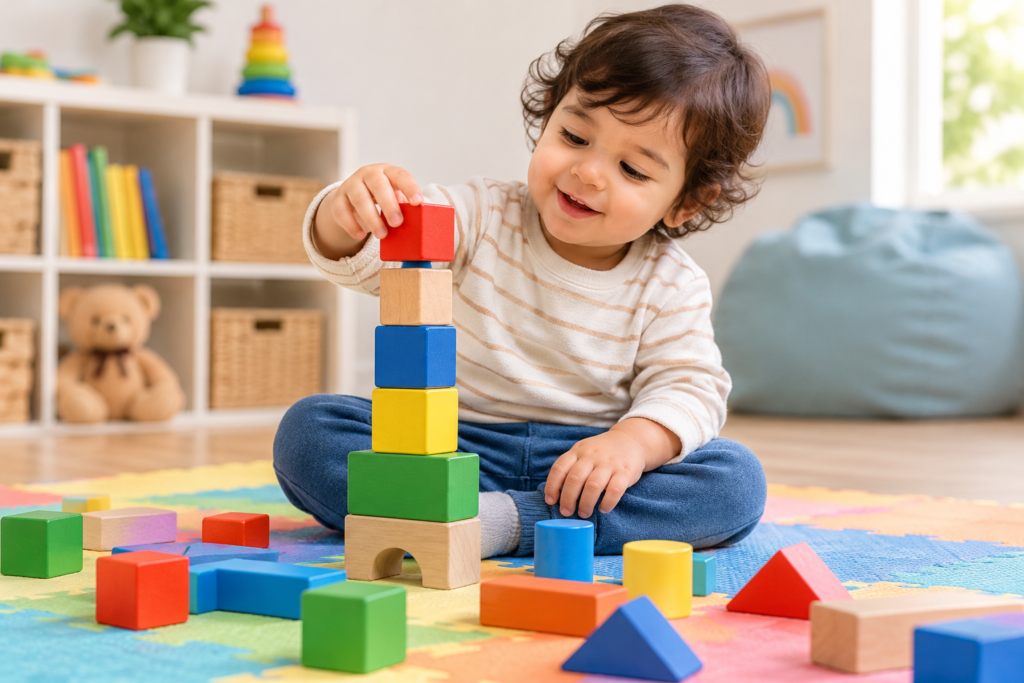
Building Blocks and Stacking Toys
What it is: Blocks, cups, rings or bricks that can be piled, lined up, nested or knocked down.
What toddlers can do: Build towers, make “roads”, sort by colour, hide things under cups and, of course, demolish everything with great delight.
Skills it may help practise: Balance, spatial awareness, early maths ideas (taller, shorter, more, fewer) and creative construction.
What to consider: Look for smooth edges, a good weight (not too heavy if dropped) and pieces that can be used in many different ways. A set that grows with your child is better value than a single-purpose toy.
Counting and Number Toys
What it is: Anything that brings numbers into play, such as counting beads, number puzzles, stacking number blocks or simple board books with counting toys.
What toddlers can do: Touch and move objects while you count, match numerals to quantities (more likely at 2–3) and sing counting songs.
Skills it may help practise: Early number words, one-to-one counting and understanding “one”, “two” and “more”.
What to consider: Don’t expect accurate counting at first. Hearing the numbers in a relaxed, playful way is enough. Choose large, clearly marked pieces.
Sensory and Interactive Toys
What it is: Toys that offer different textures, sounds, lights or movements, plus simple cause-and-effect toys such as pop-up toys or sound-making instruments.
What toddlers can do: Press, shake, squeeze, pull and listen, then repeat to see what happens again.
Skills it may help practise: Curiosity, cause-and-effect understanding, listening and early coordination.
What to consider: Choose toys appropriate for your toddler’s age, with secure battery compartments if there are batteries. Too much noise and flashing can be overstimulating, so a toy your child can control is usually better than one that does everything for them.
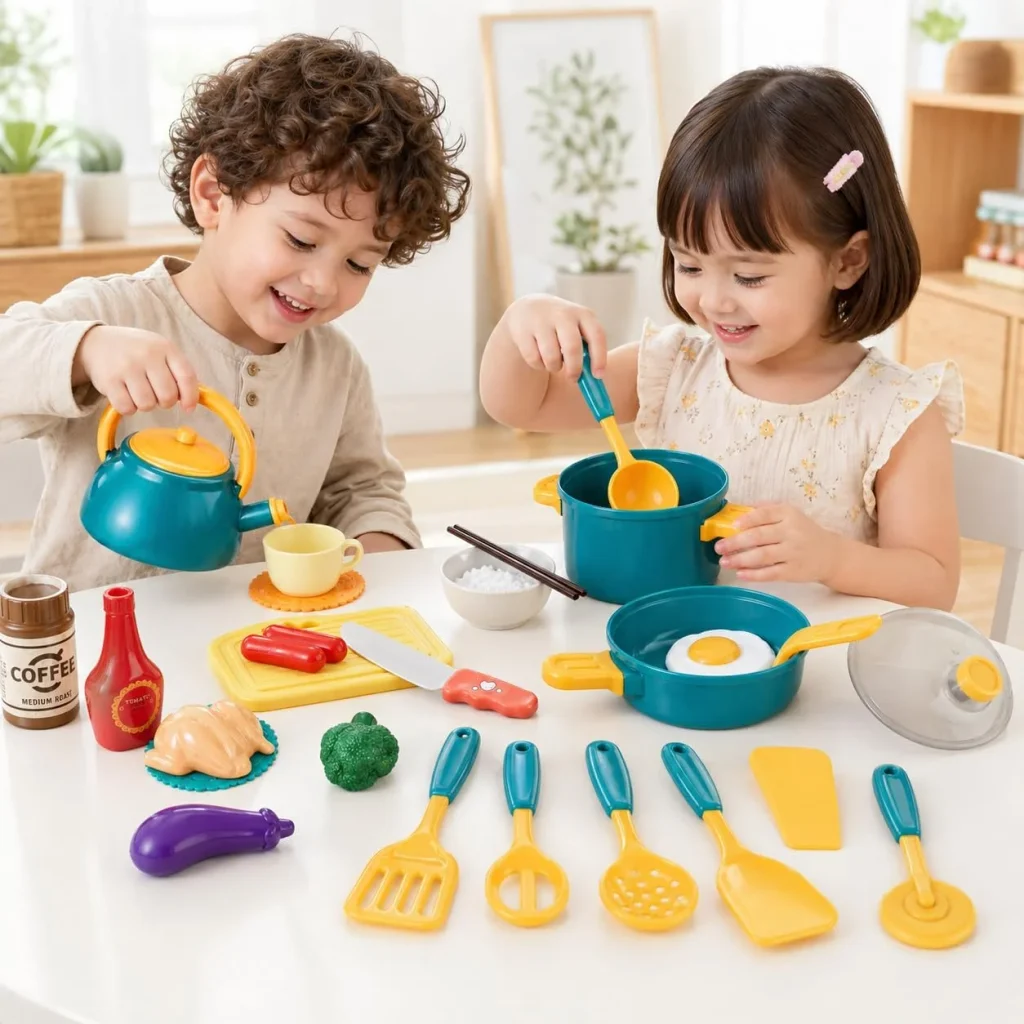
Pretend Play and Role-Play Toys
What it is: Toy kitchens, play food, tea sets, dolls, doctor kits, tool sets and other items that let children copy real life.
What toddlers can do: Cook, serve, feed a doll, “shop”, tidy up and act out the routines they see at home.
Skills it may help practise: Imagination, communication and vocabulary, turn-taking when playing with others, and understanding everyday routines.
What to consider: A toy kitchen is a good example, as it gives lots of room for conversation: “What shall we cook?” “Is it hot?” “Who’s hungry?” Look for stable construction and food pieces that are chunky enough to be safe for your child’s age.
Creative and Drawing Toys
What it is: Chunky crayons, washable markers, easels, play dough, stickers and other mark-making materials.
What toddlers can do: Scribble, make dots and lines, explore colours, squish and roll dough.
Skills it may help practise: Grip and hand control, colour exploration and creative expression. Scribbling is a real first step towards later writing.
What to consider: Choose non-toxic, washable materials designed for young children, and always supervise. Focus on the process, not on producing a “picture”.
Choosing Educational Toys by Age
Age ranges are general guides. Some toddlers will be ready for a toy earlier, others later, and both are perfectly normal. Always follow the manufacturer’s age recommendation on the packaging.
Educational Toys for 1-Year-Olds
At this age, children are learning through their hands and mouths, and they’re beginning to walk and talk. Good choices include:
- Chunky stacking cups or rings.
- Large, simple shape sorters with a small number of shapes.
- Soft or wooden blocks.
- Push-and-pull toys for new walkers.
- Simple cause-and-effect toys, such as pop-ups.
- Board books and sturdy musical instruments.
Educational Toys for 2-Year-Olds
Two-year-olds are busy, curious and developing language fast. They love copying adults. Try:
- Chunky puzzles with a few pieces.
- Building blocks for taller towers and simple structures.
- Play food, kitchens and tea sets.
- Crayons, play dough and stickers.
- Simple matching and sorting games.
- Toy vehicles, animals and dolls for storytelling.
Educational Toys for 3-Year-Olds
By three, many children enjoy longer, more detailed play and can follow simple rules. Options include:
- Puzzles with more pieces.
- Counting and number games.
- Creative sets such as easels and larger art kits.
- Role-play sets (shop, doctor, builder, kitchen).
- Construction toys with larger connecting pieces.
- Simple board and matching games for playing together.
A Quick Toy-Safety Reminder
Safety always comes first. Before giving any toy to a toddler:
- Check the age label. Many toys are marked for children over 3 because of small parts. Never ignore this if you have a child under 3.
- Watch for small or detachable parts. Anything that fits through a toilet-roll tube may be a choking hazard for young children.
- Inspect toys regularly for cracks, loose pieces or damaged batteries, and remove broken items.
- Keep button batteries and magnets well out of reach. Both can cause serious harm if swallowed.
- Look for UK safety markings such as UKCA or CE, and buy from a reputable seller.
- Supervise play, especially with art materials, small objects and new toys.
How to Choose the Right Educational Toys for Your Toddler
When you’re standing in front of a screen full of options, this checklist can help:
- Is it safe and the right age? Check the age label, the size of the parts and the build quality.
- Does it match their interests? A child who loves cars may engage more with a ramp-and-vehicles set than a shape sorter. Start with what they already enjoy.
- Does it suit their current stage? The best toy is slightly challenging but achievable. Too hard leads to frustration; too easy leads to boredom.
- Is it durable and easy to clean? Toddlers drop, chew and throw. Wipe-clean surfaces and sturdy materials save you stress.
- Can it be used in more than one way? Blocks can become towers, bridges, food or phones. Open-ended toys last longer and spark more imagination than toys with a single “right” way to play.
- Is it simple? Avoid toys with so many buttons and modes that your child just watches. If the toy does all the work, your toddler does less of the learning.
- Will you use it together? The most valuable thing about any toy is the conversation and fun it creates with you.
Simple Ways to Make Learning Through Play More Fun
You don’t need to plan lessons. A few relaxed ideas are plenty:
- Sorting: Sort socks, toy animals or blocks by colour into bowls. Say the colour names as you go.
- Stacking: Build a tower together, count the blocks, then let your toddler knock it down. Celebrate the crash!
- Counting: Count steps, spoons or toy cars as part of the day. “One, two, three, up we go!”
- Pretend play: Set up a tea party or a restaurant. Ask questions such as “What’s on the menu today?” to encourage talking.
- Colour hunts: Find something red in the room, then something blue. Turn tidy-up time into a game.
- Mark-making: Offer chunky crayons and large paper, then let them scribble freely.
A few gentle principles help:
- Follow your child’s lead. If they’re more interested in the box than the toy, that’s fine.
- Keep it short and playful. Five happy minutes beat twenty tense ones.
- Supervise appropriately, especially with small items, art materials and water play.
- Resist turning play into a test. Skip the quizzing and simply join in.
Explore Educational Toys at Toyana
If you’re looking for toys that help your toddler explore, build, pretend and create, you’ll find a range of options at Toyana, a UK online store for toys and personalised gifts. Whether you want a first set of blocks, a pretend-play kitchen or something creative for rainy afternoons, it’s worth browsing to see what suits your child’s age and interests.
As always, check the age guidance and safety information on each product page before you buy.
Frequently Asked Questions
1. What are the best educational toys for toddlers?
There isn’t one “best” toy, but simple, open-ended toys tend to offer the most value. Blocks, stacking toys, shape sorters, pretend-play sets, chunky puzzles and creative materials all give toddlers different ways to explore and practise skills. The best choice depends on your child’s age, interests and stage.
2. Which educational toys are suitable for a 1-year-old?
Look for large, sturdy toys with no small parts: stacking cups, soft or chunky blocks, simple shape sorters, push-and-pull toys, board books and basic musical toys. Always check the manufacturer’s age recommendation.
3. What are the best learning toys for 2-year-olds?
Two-year-olds often enjoy chunky puzzles, building blocks, play food and kitchens, play dough, crayons, simple matching games and toy animals or vehicles for storytelling. These support language, creativity and coordination.
4. How do educational toys help toddlers learn?
They give children something to explore and practise with. Through handling, sorting, building and pretending, toddlers can develop coordination, early problem-solving and communication skills. Toys work best when adults join in, talk and play alongside the child. They support learning rather than guarantee particular results.
5. Are wooden toys better than plastic educational toys?
Not necessarily. Wooden toys are often sturdy and simple, and many families like their look and feel. Plastic toys can be lightweight, easy to wipe clean and brightly coloured. What matters most is that the toy is well made, safe, suited to your child’s age and used in ways your child enjoys.
6. How much time should toddlers spend playing with educational toys?
There’s no set amount. Toddlers usually play in short bursts, so let your child lead and stop when interest fades. A mix of toys, outdoor play, books, music and everyday activities with you is ideal.
7. How can parents encourage learning through play at home?
Play alongside your child, talk about what you’re doing, follow their interests and keep sessions relaxed. Everyday items such as pots, boxes and socks can be just as useful as shop-bought toys. Rotate a few toys at a time to keep things fresh.