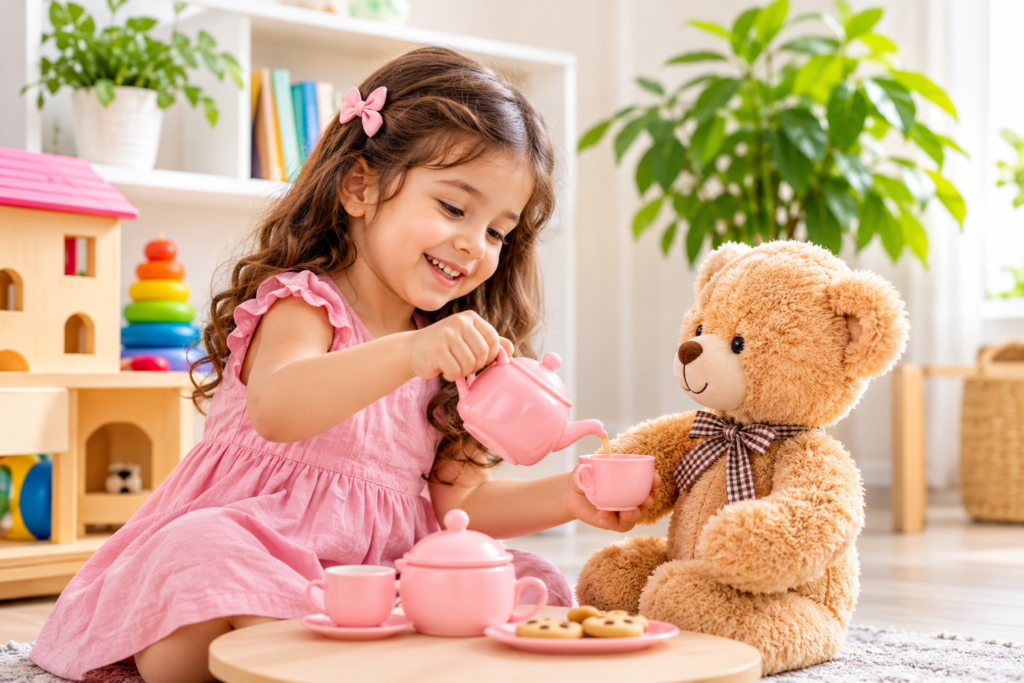
A small child tips a toy kettle, carefully “pours” tea for a teddy and announces that lunch is ready. In the next room, a sibling opens a shop made from cardboard boxes and charges you three pretend pounds for a loaf of bread. It may look like simple fun, and it is, but it’s also how children make sense of the world.
This is pretend play: acting out ideas, roles and everyday situations with toys, props and imagination. Cooking meals, playing doctor, looking after dolls and running a shop are all familiar examples. Children don’t need instructions. They invent the story, choose the characters and decide what happens next.
In this guide, we look at the benefits of pretend play toys for children’s development, with realistic examples rather than big promises. You’ll also find out which types of toys suit different ages, how to encourage imaginative play at home and what to think about when choosing toys.
What Is Pretend Play?
Pretend play (also called imaginative or role play) happens when a child uses an object, an action or their own imagination to stand for something else. A wooden spoon becomes a microphone. A cushion becomes a boat. A toy kitchen becomes a busy restaurant.
Common examples include:
- Cooking and serving food in a toy kitchen.
- Running a shop with a till and play money.
- Playing doctor, nurse, vet or teacher.
- Making up stories with dolls and toy animals.
- Using toy food, tea sets and household props to copy daily routines.
The key difference between pretend play and a structured activity is who is in charge. A structured activity, such as a puzzle or a board game, usually has rules and a set goal. Pretend play is open-ended. There’s no right answer, no winning and no fixed ending, which is exactly why children enjoy it.
Why Is Pretend Play Important for Children’s Development?
Pretend play gives children a safe space to try things out. They can explore ideas, copy what they see adults doing, express how they feel and practise situations such as visiting the doctor or going shopping. When they play with others, they also learn to listen, share ideas and adapt.
It helps to be realistic about what this means. Toys don’t guarantee any particular outcome, and children develop at different speeds. But imaginative play offers regular, enjoyable opportunities to practise skills such as talking, thinking, planning and getting along with others. That’s valuable, especially when the child is happily absorbed and not being pushed.
7 Key Benefits of Pretend Play Toys for Children’s Development
1. Encourages Creativity and Imagination
In pretend play, children invent stories, characters and settings. A set of toy animals might become a farm one day and a rescue mission the next.
Example: A child turns a play food set into a bakery, names the shop and decides that every cake is for a birthday party.
How toys can help: Open-ended toys, such as a toy kitchen, dolls or simple props, don’t tell children what to do. They leave room for the child’s own ideas.
2. Supports Language and Communication Skills
Role play is full of talking. Children narrate what they’re doing, give characters voices, ask questions and try out new words they’ve heard at home or in books.
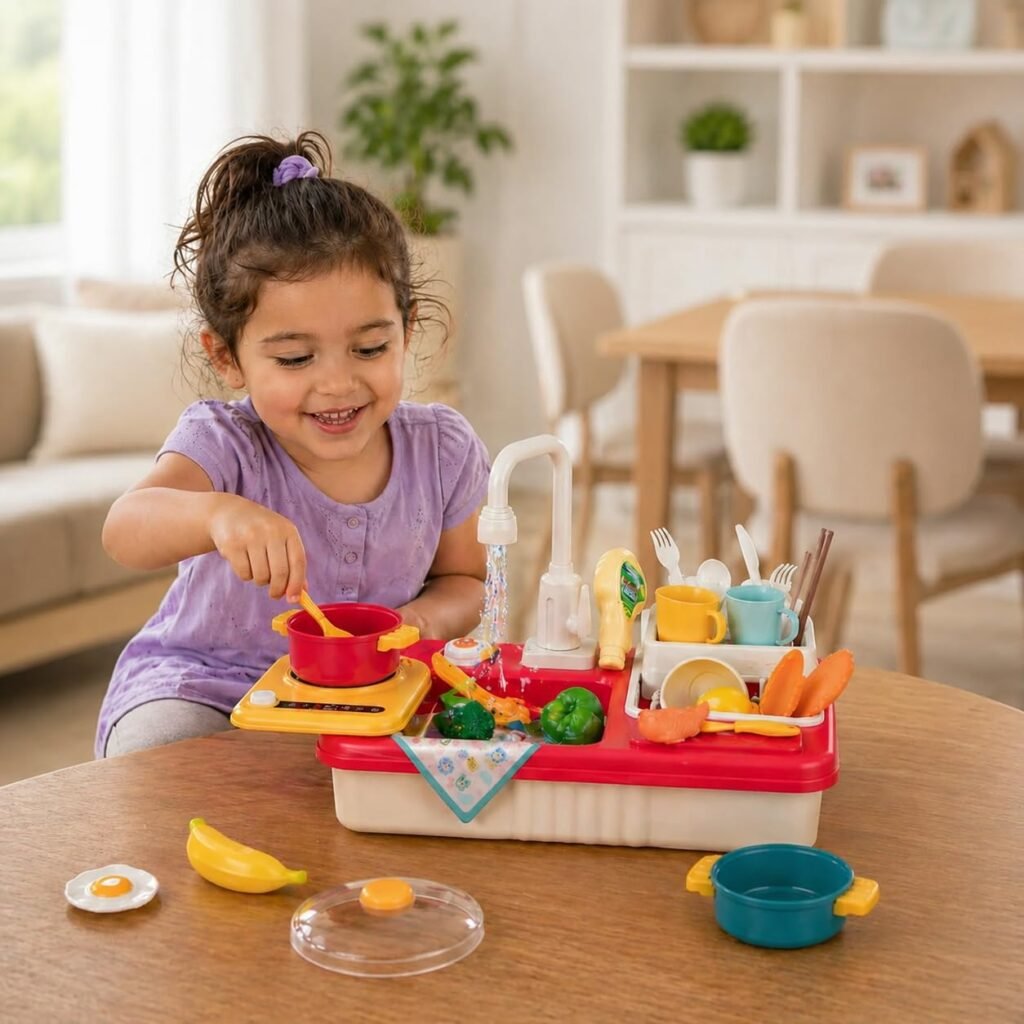
Example: While “cooking”, a child might say, “First we chop the carrots, then we put them in the pan, then it’s hot!”
How toys can help: Toys linked to real-life routines, like a kitchen, shop or doctor’s kit, bring in useful everyday vocabulary and give parents natural things to ask about.
3. Helps Develop Social Skills
Playing with a sibling or friend means agreeing on roles, taking turns and working together. Who is the customer? Who runs the shop? Disagreements are part of it, and children gradually learn to negotiate.
Example: Two children set up a restaurant, one as chef and one as waiter, and swap roles halfway through.
How toys can help: Shared sets with several pieces or roles, such as a till and play food, make it easier for more than one child to join in.
4. Encourages Emotional Expression
Pretend scenarios can give children a way to explore feelings and everyday situations. They may comfort a teddy who is “poorly” or act out a first day at nursery.
Example: A child “bandages” a doll and says, “Don’t worry, I’ll look after you.”
How toys can help: Dolls, soft toys and medical play sets allow children to practise caring and understanding how others feel. Keep in mind this is a gentle opportunity to explore feelings, not a substitute for talking with your child about worries.
5. Develops Problem-Solving and Decision-Making
Even simple role play involves choices and puzzles to solve. What will we cook? How much does the apple cost? What do we do when the shop runs out of bread?
Example: A child organises a pretend shop, deciding where each item goes and what to charge.
How toys can help: Toys with different parts to sort, arrange and use, like play food or a cash register, give children small decisions to make.
6. Encourages Independent and Confidence-Building Play
When children choose their own game, they make their own decisions and follow their own ideas. That can build confidence, especially when an adult steps back and lets them lead.
Example: A child sets up a tea party on their own, arranges the toys and serves everyone in turn.
How toys can help: Sturdy, easy-to-use toys that a child can set up without help support independent play.
7. Introduces Everyday Life Skills
Children love copying grown-ups. Pretend shopping, cooking, tidying and caring for a doll help them understand familiar routines and feel included in the world around them.
Example: A child “washes up” after pretend dinner and puts the plates away.
How toys can help: Realistic-style props, such as toy utensils, play food and a shopping basket, make everyday routines easy to act out.
Best Types of Pretend Play Toys for Children
Pretend Kitchen Sets
Toy kitchens are a long-time favourite. Children can cook, serve and clear up, copying the routines they see at home. They suit a wide age range, as toddlers may simply stir and pour while older children invent whole menus and restaurants.
Pretend Food and Cutting Toys
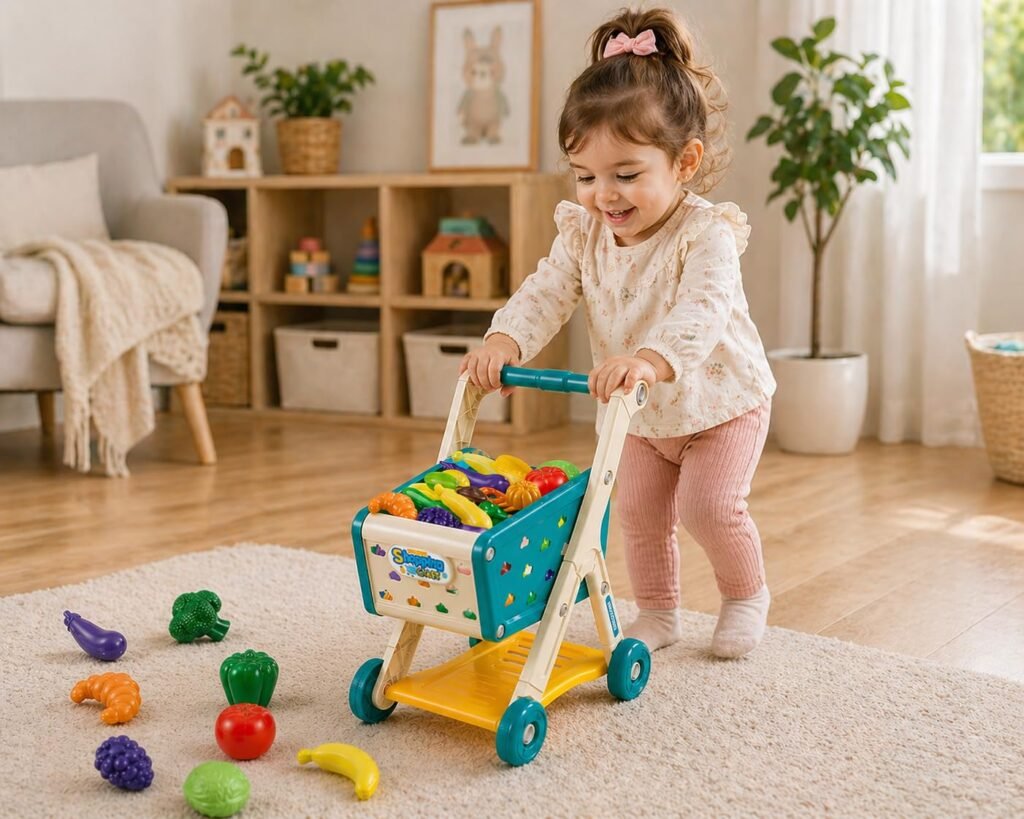
Play food helps children recognise familiar foods and set up shops, picnics and meals. Cutting sets add a hands-on element, with children “slicing” fruit and vegetables. Check the size of the pieces and the manufacturer’s age guidance, as small parts can be a choking hazard for younger children.
Doctor and Medical Play Sets
Doctor sets let children explore caring roles and familiar healthcare situations. For some children, acting out a check-up with a doll or teddy can make real appointments feel a little less unfamiliar.
Dolls and Toy Animals
Dolls and animals are great storytelling characters. Children can feed them, put them to bed, give them names and send them on adventures, practising nurturing and imaginative scenarios as they go.
Shop and Cash Register Toys
Shops combine buying, selling, counting and customer-service role play. Children may practise saying “hello”, handling pretend money and counting items, all inside a story.
Creative Role-Play Accessories
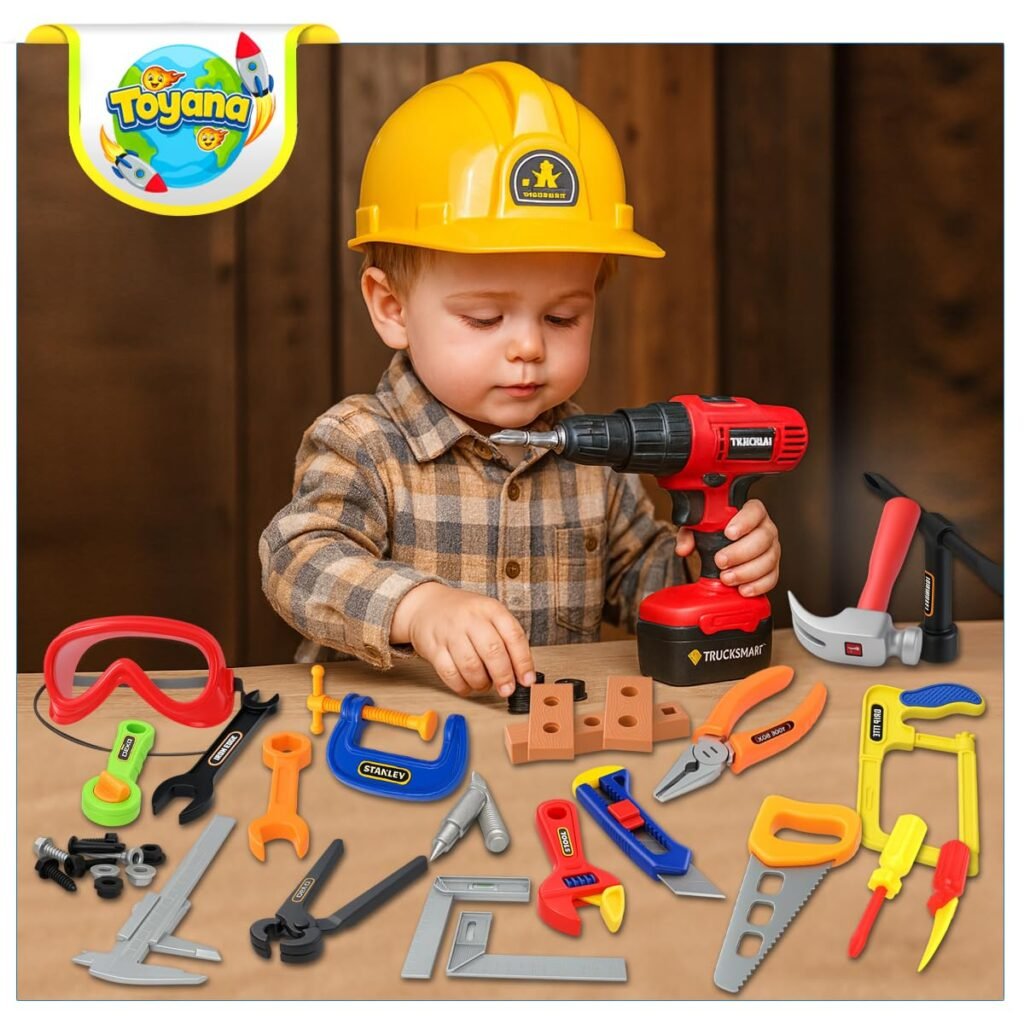
Costumes, hats, bags and themed accessories can spark new scenarios. A simple apron can turn a child into a chef, while a toy tool belt may inspire a builder. Look for comfortable, safe items that are easy for children to put on themselves.
At What Age Should Children Start Pretend Play?
Age ranges are general guides only, and children develop at their own pace.
- Toddlers (1–2 years): Simple imitation often comes first, such as “drinking” from a toy cup, “feeding” a doll or talking into a toy phone. Chunky, safe, easy-to-hold props work best.
- Ages 2–3: Play becomes more imaginative. Children begin to use objects to stand for other things and to act out short routines, like cooking or putting a teddy to bed.
- Preschool (3–5 years): Stories become longer and more detailed. Children take on roles, such as shopkeeper, vet or parent, and often enjoy playing with others.
- Ages 5–8: Play can become more elaborate, with planned scenarios, rules and props, such as running a pretend café with menus, orders and prices.
How Parents Can Encourage Pretend Play at Home
You don’t need lots of equipment or a big budget. Some simple ideas:
- Set up a pretend kitchen. A toy kitchen is ideal, but a cardboard box and some pans work too. Invite your child to “cook” for you.
- Create a mini home shop. Use real empty packets, a basket and a toy till or paper money. Take turns being the shopkeeper and the customer.
- Play doctor with dolls and soft toys. Let your child be the doctor, then ask, “Where does teddy feel poorly?”
- Make up stories with toy animals. Ask open questions, such as “What happens next?” and let your child steer.
- Let your child choose. Offer a few toys and let them decide what the game is.
- Join in without taking over. Follow their lead, accept the role they give you and resist correcting the story.
Short, relaxed sessions often work best. Rotating a few toys at a time can also keep play fresh, and everyday household items can be just as inspiring as shop-bought ones.
How to Choose the Right Pretend Play Toys
Here’s a quick checklist when you’re comparing options:
- Age suitability: Check the manufacturer’s recommended age and make sure the toy suits your child’s current stage.
- Safety and small parts: Look for UK safety markings such as UKCA or CE, and be cautious with small pieces if you have children under 3. Check toys regularly for damage.
- Quality and durability: Role-play toys get used a lot. Strong joins, smooth edges and stable bases matter.
- Ease of cleaning: Play food and kitchen toys can get sticky. Wipe-clean surfaces help.
- Your child’s interests: A budding “chef” might love a kitchen, while an animal lover might prefer a vet set.
- Open-ended play: The best toys can be used in many different ways and don’t dictate the story.
- Space and storage: Large toys such as kitchens and shops need room. Smaller sets can be easier to tidy away.
Explore Pretend Play Toys at Toyana
Pretend-play toys can be a thoughtful addition to playtime. They encourage children to use their imagination, copy familiar routines and play with other people, away from screens. At Toyana, you can browse a range of toys for children and personalised gifts, so it’s worth exploring to find something that suits your child’s age and interests.
Whether you’re shopping for a birthday, a special occasion or simply a rainy-day activity, have a look around Toyana and see which pretend-play toys might spark your child’s next story.
Frequently Asked Questions About Pretend Play
1. What are the main benefits of pretend play?
Pretend play gives children opportunities to practise creativity, language, social skills, emotional expression, problem-solving and everyday routines. It also lets them play independently and build confidence. Benefits vary from child to child, and toys support learning rather than guaranteeing results.
2. At what age do children start pretend play?
Many children begin simple pretend play, such as drinking from a toy cup or feeding a doll, around the end of the first year or during their second year. It grows more complex through the preschool years. Every child develops differently.
3. How do pretend play toys support creativity?
Open-ended toys, such as kitchens, dolls, play food and simple props, let children invent their own stories and scenarios. Because there’s no single “right” way to play, children are free to try out their own ideas.
4. Are pretend play toys educational?
They can be. Pretend play toys give children chances to practise language, counting, decision-making and social skills in a natural, playful way. They aren’t lessons, though, and the learning happens best when children are enjoying themselves.
5. What are the best pretend play toys for toddlers?
For toddlers, simple, sturdy toys work well: toy kitchens with chunky accessories, soft dolls, large play food, tea sets and toy phones. Choose items without small parts and always follow the manufacturer’s age guidance.
6. How can parents encourage imaginative play?
Offer a few open-ended toys, give your child time and space to play, follow their lead and join in when invited. Ask open questions and avoid directing the game. Household items can work just as well as toys.
7. Is pretend play important for social development?
It can be a helpful way for children to practise sharing, taking turns, cooperating and understanding other people’s viewpoints, especially when playing with siblings or friends. It’s one of many ways children learn social skills, alongside family life, nursery and school.